Selecting a soft serve freezer involves more than choosing a brand or footprint. One of the most influential decisions an operator can make is selecting the mix delivery system. Gravity-fed and pump-pressurized soft serve machines each produce excellent results—but they do so in different ways, with noticeable impacts on texture, yield, and operational control.
Taylor Arizona works closely with foodservice operators across the state to help them understand these differences, because the right choice directly affects product consistency, customer experience, and long-term performance.
How Mix Delivery Impacts Soft Serve Performance
Soft serve machines rely on a controlled process that freezes liquid mix while incorporating air—known as overrun. The way the mix enters the freezing cylinder plays a major role in how much air is added, how consistent the product feels, and how predictable the machine performs during peak service.
The two most common systems used in commercial soft serve equipment are gravity-fed and pump-pressurized delivery.
Gravity-Fed Soft Serve Machines: Consistency Through Simplicity
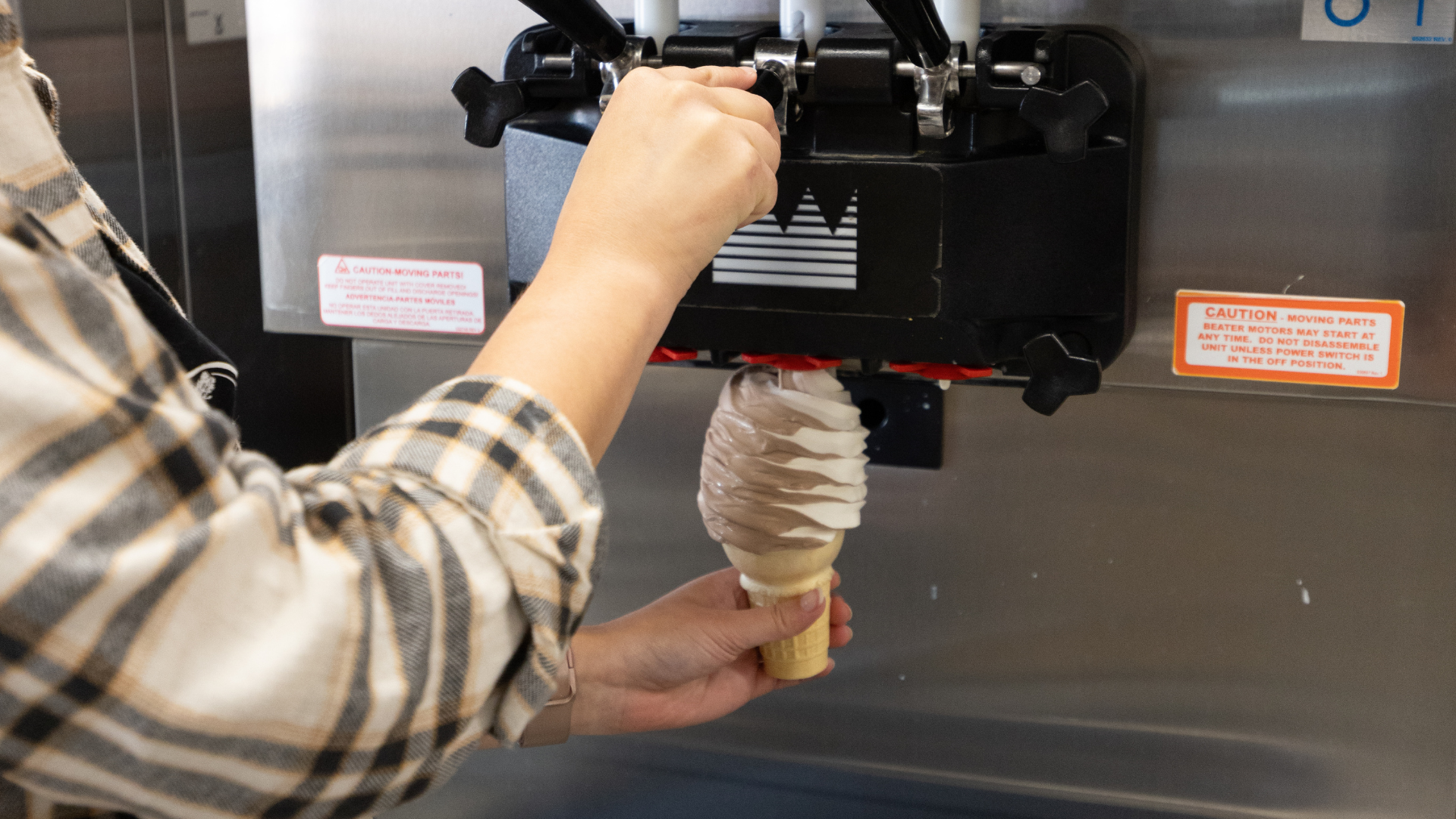
Gravity-fed machines move mix from the hopper into the freezing cylinder using gravity alone. The mix flows through a feed tube and air orifice, where a controlled amount of air is naturally introduced during freezing.
Key Performance Characteristics
- Moderate, Consistent Overrun: Typically produces soft serve in the 30–40% overrun range
- Denser Mouthfeel: Results in a richer, more traditional soft serve texture
- Operational Simplicity: Fewer moving components reduce mechanical complexity
Because gravity-fed systems rely on fewer mechanical parts, they are often favored for their reliability and straightforward operation. Cleaning and maintenance routines are generally simpler, making these machines well-suited for operations that value consistency and ease of use.
Operational Fit
Gravity-fed machines are commonly used in:
- High-volume restaurants
- QSR environments
- Locations prioritizing uniform texture across every serving
Twin-twist gravity-fed models are especially effective for operations serving multiple flavors while maintaining steady output during rush periods.
Pump-Pressurized Soft Serve Machines: Precision & Flexibility
Pump-pressurized machines use a mechanical pump to deliver mix into the freezing cylinder under pressure. This design allows operators to actively control how much air is incorporated into the product, resulting in a broader overrun range.
Key Performance Characteristics
- Adjustable Overrun: Typically ranging from approximately 25% to as high as 80%
- Texture Versatility: Capable of producing lighter, creamier products or denser formulations
- Higher Yield Potential: Increased overrun can translate into more servings per batch
Taylor pump systems allow overrun adjustments through changes to pump components, such as valve caps or valve bodies, depending on pump style. Once properly set and maintained, these systems deliver consistent results with a high degree of control.
Operational Fit
Pump machines are often selected by:
- High-volume dessert concepts
- Operators offering multiple product styles
- Locations balancing texture preferences with yield optimization
Pump systems are particularly useful when menu flexibility or precise texture control is a priority.
Comparing Gravity-Fed and Pump Systems Side by Side
While both systems are designed for commercial reliability, their differences become most apparent in daily operation:
- Texture: Gravity-fed systems produce a naturally denser product; pump systems allow for a wider range of textures
- Overrun Control: Gravity systems offer consistency by design, while pump systems provide adjustability
- Maintenance Considerations: Gravity-fed machines typically involve fewer components; pump systems require careful setup and routine calibration
Neither system is inherently “better”—the right choice depends on menu goals, operational preferences, and service volume.
Choosing the Right System for Your Operation
The decision between gravity-fed and pump-pressurized equipment should be guided by how soft serve fits into the broader operation. Factors such as desired mouthfeel, serving volume, staffing experience, and long-term maintenance planning all play a role.
Operators who prioritize simplicity and a classic soft serve profile may gravitate toward gravity-fed designs. Those seeking flexibility, higher yield, or more control over texture often find pump systems to be the better match.
Understanding these distinctions helps operators align equipment capabilities with customer expectations—rather than adapting the menu to the machine.
How Taylor Arizona Supports Informed Equipment Decisions
Taylor Arizona helps operators evaluate soft serve equipment based on real-world performance, operational goals, and long-term reliability. Through product guidance, technical expertise, and authorized service support, Taylor Arizona ensures each machine—gravity-fed or pump-pressurized—is properly selected, installed, and maintained to perform as intended over time.