In foodservice, success is not defined by square footage. Many high-performing restaurants operate within compact kitchens, proving that thoughtful design, strategic equipment selection, and efficient workflows can outperform much larger spaces. When space is limited, every decision matters—and when planned correctly, small kitchens can deliver exceptional consistency, speed, and quality.
For restaurants navigating tight footprints, compact kitchens present both challenges and opportunities. By prioritizing efficiency and selecting equipment designed for performance without excess bulk, operators can transform space limitations into operational advantages.
Why Smaller Kitchens Can Outperform Larger Ones
Compact kitchens often encourage smarter design and stronger discipline. Rather than working around inefficiencies, teams are forced to streamline movement, eliminate unnecessary steps, and focus on what truly drives output.
Operational Efficiency
Smaller kitchens naturally support tighter workflows. With shorter distances between prep, cooking, and finishing stations, staff spend less time moving and more time executing. When paired with the right equipment layout, this proximity improves speed, communication, and coordination during peak service.
Creative Problem Solving
Limited space often leads to innovative thinking. Chefs and operators working in compact environments tend to adopt versatile equipment and refined processes that support menu flexibility without clutter. These constraints can inspire inventive solutions that elevate both food quality and execution.
Cost-Conscious Design
From reduced utility usage to lower build-out costs, smaller kitchens can be more economical to operate. Efficient equipment footprints and multi-function appliances further reduce overhead while supporting sustainability goals through smarter energy and resource use.
Smart Space-Saving Strategies for Commercial Kitchens
Maximizing performance in a small kitchen starts with choosing equipment that delivers more output per square foot. Modern foodservice equipment is increasingly designed with compact footprints and multi-functional capabilities to support space-conscious operations.
Countertop-Focused Equipment
Countertop appliances allow operators to preserve valuable floor space while keeping essential tools within arm’s reach. Compact beverage freezers, countertop cooking equipment, and space-efficient warming solutions support high output without crowding the kitchen layout.
Multi-Function Equipment
Equipment that performs multiple cooking methods in one footprint significantly reduces the need for separate appliances. Combining functions such as convection cooking, steaming, and grilling helps streamline menus while conserving space.
Right-Sized Core Equipment
Scaled-down versions of essential equipment—such as single-platen grills or compact fryers—provide commercial-grade performance without oversized footprints. These units maintain throughput while allowing kitchens to remain flexible and organized.
Essential Equipment Categories for Compact Kitchens
Combi Ovens
Combi ovens are among the most valuable tools in space-limited kitchens. By combining convection heat and steam in a single unit, they allow operators to prepare a wide range of menu items with consistent results. Precision controls support repeatability while reducing the need for multiple appliances.
Countertop Freezers
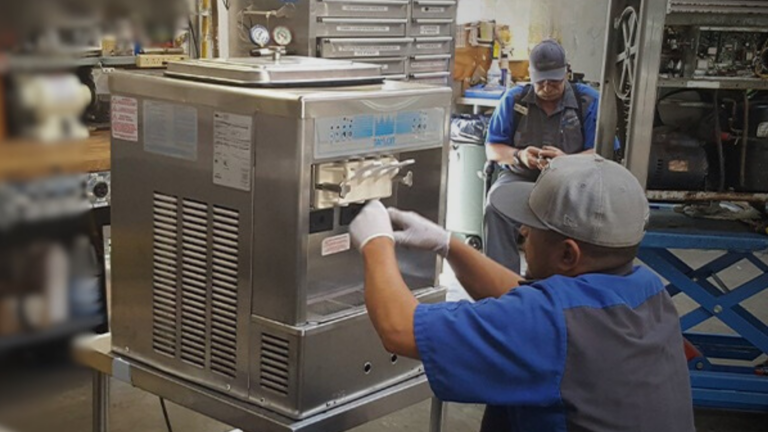
For frozen desserts and beverages, countertop freezers provide easy access without occupying floor space. Their placement improves ergonomics and workflow while maintaining consistent product quality.
Compact Fryers
Smaller-footprint fryers enable restaurants to serve popular fried items without sacrificing space. Modern compact fryers heat quickly, recover efficiently, and support high-volume output in tight layouts.
Single- and Double-Platen Grills
Platen grills deliver fast, consistent cooking with minimal space requirements. Full-contact cooking improves speed and product uniformity, making these grills ideal for high-demand menus in compact kitchens.
Turning Space Constraints into Competitive Advantages
A well-designed small kitchen prioritizes purpose over excess. When equipment selection aligns with menu goals and workflow demands, limited space becomes an asset rather than an obstacle. Compact kitchens that emphasize efficiency, versatility, and thoughtful layout often outperform larger operations burdened by unnecessary complexity.
By focusing on right-sized equipment and intelligent design, restaurants can achieve consistency, speed, and profitability—regardless of kitchen size.
How Taylor Arizona Supports Space-Efficient Kitchen Design
Taylor Arizona works with foodservice operators to identify equipment solutions that maximize output in limited spaces. Through deep product expertise, factory-trained support, and an understanding of real-world kitchen challenges, Taylor Arizona helps compact kitchens operate efficiently, reliably, and confidently—without compromising performance or quality.