Understanding the Basics of Soft Serve Production
Soft serve often looks effortless as it flows into a cone, but the process behind that smooth swirl is carefully controlled. New operators and seasoned professionals alike benefit from understanding how soft serve equipment transforms liquid mix into a consistent, creamy product.
At its core, soft serve production relies on precise temperature management, controlled motion, and measured air incorporation. When these elements work together properly, the result is a product that looks appealing, holds its shape, and delivers a predictable eating experience.
From Liquid Mix to Finished Product
Soft serve begins as a prepared liquid mix stored inside the machine until it is ready to be frozen. As the mix enters the freezing chamber, it is chilled while simultaneously being agitated. This motion prevents large ice crystals from forming and helps distribute air evenly throughout the product.
Understanding this process explains why stable temperatures and continuous movement are essential. Even small variations can affect texture, appearance, and yield.
Core Components That Drive Performance
While commercial soft serve machines are engineered for durability, their core components are straightforward. The mix hopper stores the product before freezing. From there, the mix flows into a freezing cylinder where the transformation happens.
Inside the cylinder, rotating beaters continuously scrape the chilled surface, blending air into the mix and maintaining smoothness. The dispensing system then controls how the finished product is delivered. These foundational elements work together in all professional soft serve equipment, including Taylor Company models.
Gravity-Fed vs. Pump-Fed Systems
One of the most important distinctions in soft serve equipment is how air is introduced into the product. Gravity-fed machines rely on natural flow, allowing the mix to enter the freezing cylinder without mechanical assistance. These systems are known for simplicity and dense texture.
Pump-fed machines, on the other hand, use an air pump to regulate how much air is blended into the mix. This added control allows for higher output and lighter texture. Comparing gravity and pump systems helps operators align equipment selection with menu goals and volume expectations.
Why Overrun Shapes Texture and Yield
Overrun refers to the percentage of air incorporated into soft serve during freezing. Higher overrun produces a lighter, more aerated product, while lower overrun results in a richer, denser texture.
The ideal overrun level depends on the brand, recipe, and customer expectations. Understanding how overrun influences mouthfeel and appearance gives operators greater control over product consistency and cost management.
The Role of the Freezing Cylinder
The freezing cylinder is the heart of the machine. As chilled surfaces freeze the mix, beaters maintain constant motion to ensure even consistency. This balance between freezing and movement is what prevents icy texture and uneven results.
Many Taylor Company models include built-in controls that help maintain consistent freezing conditions throughout the day, allowing machines to perform reliably during both slow periods and peak demand.
Designed for Consistency & Reliability
Taylor Company soft serve equipment is designed with repeatability in mind. Whether configured with gravity feed or pump technology, each system is engineered to manage air intake, freezing temperatures, and product flow with precision.
For operators, this consistency translates into predictable servings, stable texture, and confidence that the product will meet expectations from the first cone to the last.
Maintenance as a Key Part of Performance
Routine cleaning and scheduled maintenance are essential to proper machine operation. Food-contact components must be cleaned at manufacturer-recommended intervals to protect product quality and food safety.
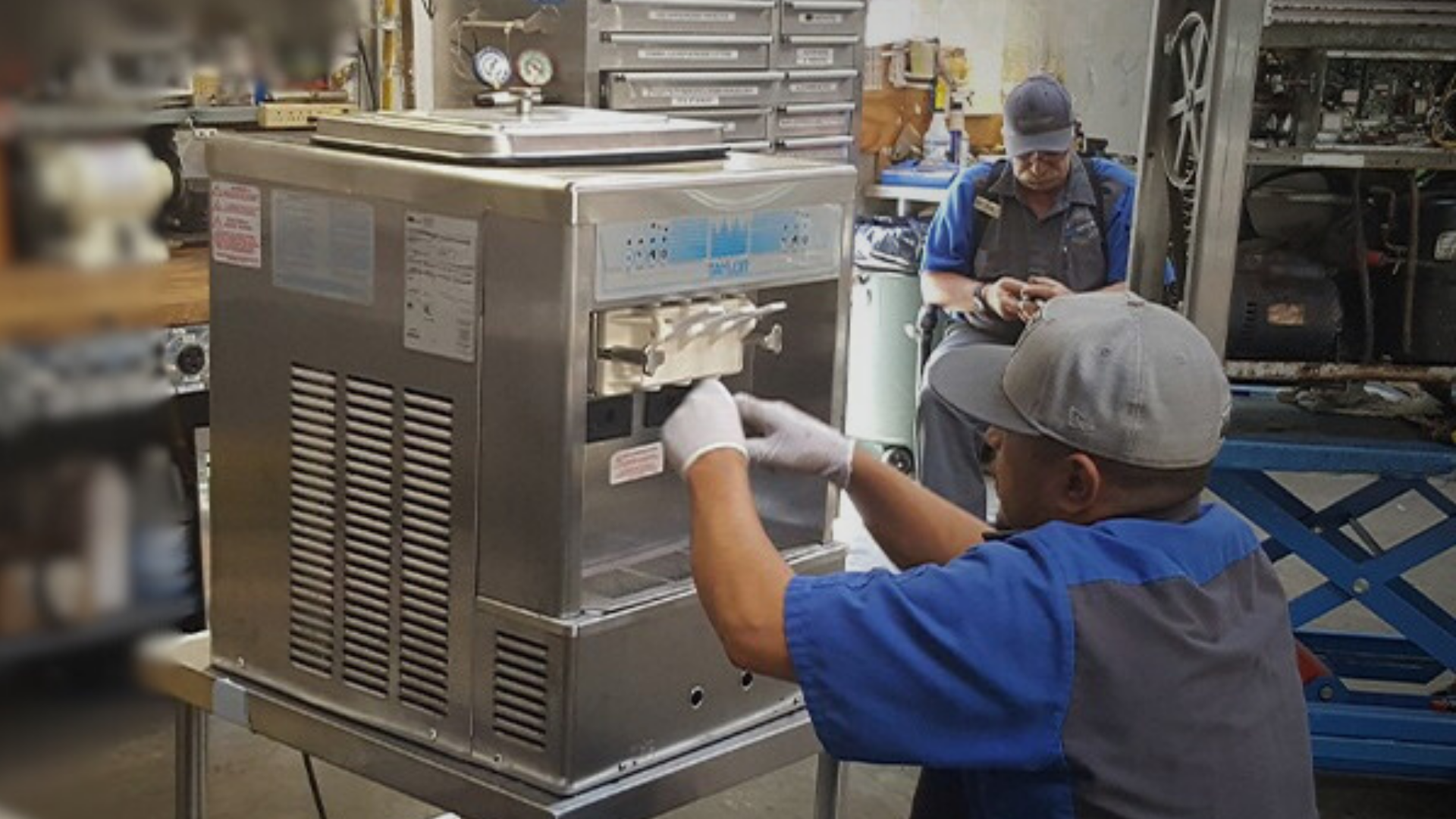
Service, repairs, and preventive maintenance should always be performed by authorized Taylor distributor technicians. This ensures equipment operates as designed while preserving warranty coverage and long-term reliability.
Turning Knowledge Into Confidence
When operators understand how mix moves through the machine, how air affects texture, and how freezing creates consistency, soft serve equipment becomes far less intimidating. Familiarity with the machine’s working principles allows teams to respond quickly to changes, maintain quality, and manage daily operations with confidence.
Taylor Arizona supports this understanding through expert guidance, authorized service, and industry-proven soft serve solutions, helping operators deliver consistent results with confidence, every day.